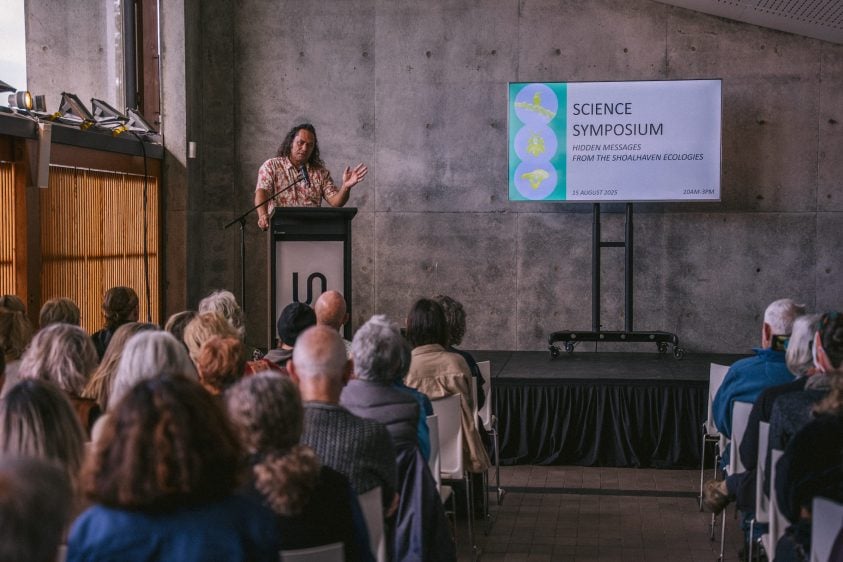
Hosted by Clarence Slockee, the program explores biodiversity, climate science, ecology, and landscape restoration.
Bundanon’s Science Symposium returns in 2026 with an extraordinary line-up of leading voices in science, ecology and environmental thinking, all connecting with this year’s theme Growing Knowledge: Seeds of Science at Bundanon.
Through a program of talks, conversations and guided walks across Bundanon, explore some of the most pressing questions shaping our understanding of the natural world. Topics span biodiversity, climate science, river systems, soils, fungi, deep time and landscape restoration all connecting with this year’s theme Growing Knowledge: Seeds of Science at Bundanon.
Hear from some of Australia’s most compelling thinkers and practitioners as they share new ways of understanding and caring for Country—from First Nations knowledge systems and ecological design to cutting-edge environmental research.
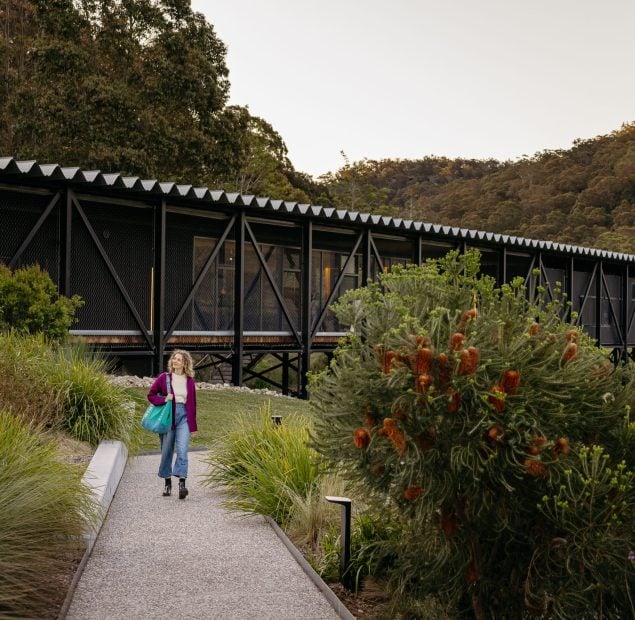
Set within the unique river valley landscape, this is a rare opportunity to experience science in place, where ideas are shaped by Country, fostering deeper connections between people, knowledge and the environment.
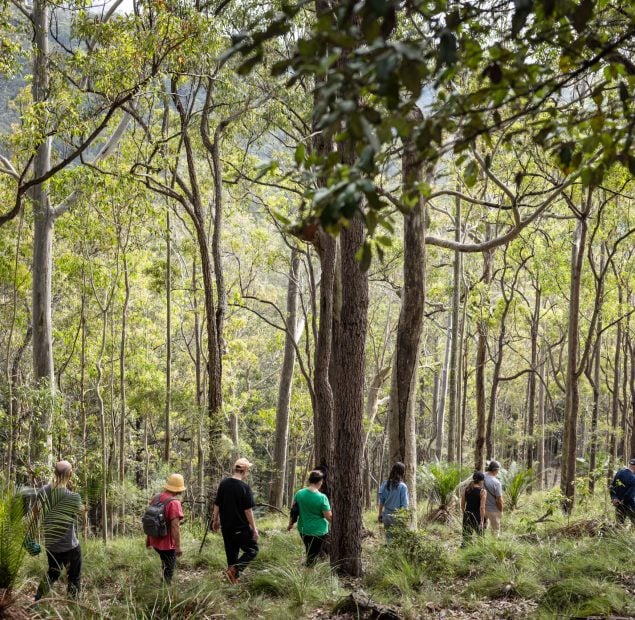
Science Symposium guests are invited to join guided science and nature walks on the day including Native Bees with Alison Mellor, Birdwatching with Birdlife Shoalhaven and Reading Country Cultural Walk, available at an additional cost per walk.
Speakers
Hear from some of Australia’s most compelling thinkers and practitioners as they share new ways of understanding and caring for Country—from First Nations knowledge systems and ecological design to cutting-edge environmental research.
Clarence Slockee (host)
Bill Gammage
Billy Griffiths
Bundanon’s Natural Resource Management team
Caroline Rothwell
Chantal Milner
Dr Liam Engel
Justine E. Hausheer
Olivia De La Mare
Professor David Guest AM
Professor Richard Kingsford AO
Shoalhaven Landcare (Greg Thompson)
Participating speakers (bios can be found under Full Schedule)
Tickets
$65 General
$58 Concession
$52 Member
$25 Student
Note
General, concession and members tickets include morning tea and lunch.
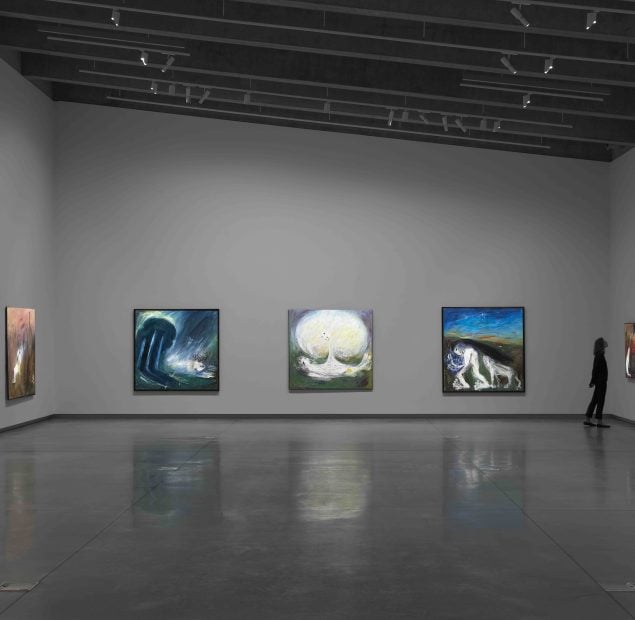
All tickets include admission to the Science Symposium + entry to Art Museum for the day.
Dates & Times
21 August 2026
9.30am–3pm
Location
Bundanon Art Museum
Boyd Education Centre
170 Riversdale Road
Illaroo NSW 2540
Full schedule
8–9am | Add-on – Native Bees Walk*
Alison Mellor
8–9am | Add-on – Birdwatching*
BirdLife Shoalhaven
9.30–10am | Smoking Ceremony & Welcome to Country
Aaron Taylor (Marring)
10–10.40am | Landcare Through Three Lenses
Clarence Slockee (chair) + panellists Greg Thompson (Shoalhaven Landcare), Aaron Taylor (Marring) & Rylan Edmistone (Natural Resources, Bundanon)
10.40–11am | The Vanishing Wild
Justine E. Hausheer
11–11.30am | Morning tea
11.30–11.50am | Digging Deep: Uncovering the Dirt on Plant Decline
Chantal Milner
11.50am–12.10pm | Plant Disease & Ecosystem Resilience
Prof. David Guest AM
12.10–12.30pm | Psychoactive Plants & Fungi
Dr. Liam Engel
12.30–12.50pm | Wildlife & Urban Ecology
Olivia De La Mare
12.50–1.20pm | Lunch
1.20–1.40pm | Rivers & Wetlands
Prof. Richard Kingsford AO
1.40–2.10pm | Marine Conservation & Ocean Health
ORRCA & Woebegone Dive, Jervis Bay
2.10–2.30pm | Living Systems – Human Interaction with the Natural World
Caroline Rothwell
2.30–3pm | Deep Time, Country & Caring For Our Future
Bill Gammage, Billy Griffiths & Jerome Comisari (chair)
3–5pm | Add-on – Cultural Walk: Reading Country*
First nations custodians, Joel Deaves & Jordan Thomas
*These additional events have limited capacity and can be added when purchasing your Science Symposium ticket.
Speakers
Bill Gammage AM FASSA
Bill Gammage is an emeritus professor in the Humanities Research Centre at the Australian National University (ANU), researching Aboriginal land management.
He grew up in Wagga and was an ANU undergraduate and postgraduate before teaching history at the Universities of Papua New Guinea and Adelaide. He wrote The Broken Years on Australian soldiers in the Great War (1974), Narrandera Shire (1986), The Sky Travellers on the 1938-39 Hagen-Sepik Patrol in New Guinea (1998), and The Biggest Estate on Earth: How Aborigines made Australia (2011). He wrote for and co-edited the Australians 1938 volume of the Bicentennial History of Australia (1988), Dunera Lives vol 2 (2020), Country: Future Fire, Future Farming (2021) and Caring for Country (2025). He was historical adviser to Peter Weir’s film Gallipoli and to several documentaries.
He served the National Museum of Australia for three years as Council member, deputy chair and acting chair. He was made a Freeman of the Shire of Narrandera in 1987, a fellow of the Australian Academy of Social Sciences in 1991, and an AM in 2005.
Billy Griffiths
Billy Griffiths is a writer and historian at Deakin University. He is the bestselling author of Deep Time Dreaming, which has won prizes in literature, archaeology and history, including Book of the Year at the NSW Premier’s Literary Awards. His latest book is The First Inventors: How people shaped a continent, with Larissa Behrendt and Sean Ulm (Allen & Unwin, 2026). He lectures in Cultural Heritage and Museum Studies and holds a research fellowship with the Deakin Institute for Citizenship and Globalisation.
Caroline Rothwell
Caroline Rothwell is a multidisciplinary artist with a research-driven art practice. Her work explores human interaction with the natural world and its lasting effects. She works across sculpture, painting, video and installation, searching for poetic, political interconnection between the systems and cycles of Nature and technologies in our time.
Chantal Milner
Chantal Milner is an Australian Certified Professional Soil Scientist (CPSS) and founder of The Urban Soil Doctor, a consultancy specialising in improving the performance, resilience and greening of urban landscapes. With over a decade of international experience across Australia, the UK and Saudi Arabia, she bridges the gap between soil science and practical landscape delivery.
Her work includes soil surveying of urban and civil sites, soil reuse and management, laboratory analysis, street tree pit design, growing media formulation and landscape failure investigations. She has worked with leading consultancies including SESL Australia and Tim O’Hare Associates, contributing to projects such as Barangaroo Headland Park, King Salman Park and Cardiff Arena.
Chantal advises designers, developers, government and arborists on integrating soil science into urban design, with a focus on improving tree performance through better soil specification and long-term soil health. She is a Certified Professional Soil Scientist accredited by Soil Science Australia and an advocate for evidence-based, resilient landscape outcomes.
Clarence Slockee
Founding Director of Jiwah(Goanna), Clarence Slockee is a Salt-Water Cudgenburra/Bundjalung Aboriginal man, environmentalist, educator and cultural design collaborator. Collaborating with a range of design partners and Country-centred design specialists, Clarence embeds traditional knowledge and cultural learning into his ongoing work. Through opportunities nationally and globally, Clarence has had the privilege of sharing culture and facilitating shared learning through performance, artistic expression and professional achievement. This passion and connection permeate his professional life and practice through collaboration in design connecting people and plants whilst re-establishing natural systems and ecologies for all. First Nations design elements enable a Connection to Country highlighting the ingenuity of Australia’s First People’s; their intrinsic understanding of nature, of balance, environmental management and a host of skills sorely needed in today’s modern world.
David Guest AM
David Guest, Professor Emeritus of Plant Pathology at The University of Sydney, has published over 150 scientific articles, taught undergraduates at all levels and supervised over 50 postdocs, PhD and Masters students. He was honoured as a Member of the Order of Australia (AM) for his research on Phytophthora diseases affecting Australian forests and horticulture. Internationally, he built transdisciplinary research partnerships to investigate One Health approaches that improve the livelihoods of cocoa farming families around the Asia-Pacific region and was awarded a Career Medal for Agriculture and Rural Development by the Government of Vietnam. He is Past-President and Fellow of the Australasian Plant Pathology Society and Past President of the Asian Association of Societies of Plant Pathology.
Justine Hausheer
Justine E. Hausheer is a science writer for the Nature Conservancy and author of The Vanishing Wild, which explores conservation science for threatened species. Her favourite stories take her into the field, where she’s followed logging elephants through Myanmar, surveyed for sea cucumbers in Manus, and waded into outback waterholes. Her stories have won awards from the Outdoor Writers Association of America and have been featured in the Best Australian Science Writing anthology. She holds a master’s degree from New York University and a bachelor’s degree from Princeton University. She now lives on Queensland’s Sunshine Coast.
Dr Liam Engel
Dr Liam Engel is an ethnobotanist, natural products chemist and science communicator specialising in psychoactive plants. Liam undertakes analytical chemistry with NICM Health Research Institute and Pill Testing Australia, is founder of The Mescaline Garden educational nursery and author of Psychoactive Plants & Fungi.
Olivia De La Mare
Olivia De La Mare is a postgraduate research ecologist in the School of Life Sciences at the University of Technology Sydney. Her work focuses on native reptile conservation in the fire-prone landscapes of the Blue Mountains National Park. She values accessible science, striving to engage with an audience wider than just the academic community. She also aims to reduce the stigma around reptiles and other misconceived faunal groups. Olivia completed her Bachelor of Environmental Biology at the University of Technology Sydney in 2024. Her current research projects are supported by the Australia Government Research Training Program Scholarship, and the 2025 Australian Wildlife Society Wildlife Ecology Science Research Scholarship.
Richard Kingsford
Richard Kingsford is a Scientia Professor and the Director of the Centre for Ecosystem Science at UNSW Sydney. He is a conservation biologist who has worked extensively on ecosystem restoration and threats to biodiversity in Australia and around the world. He has led projects in aerial surveys of waterbirds, informing river management, reintroduction of platypuses and reintroductions of locally extinct mammal species. He has expertise in conservation of ecosystems, particularly freshwater aquatic ecology. He has worked with many different communities and governments across Australia on conservation management of ecosystems. His research has influenced conservation policy and management, including through involvement on state and federal advisory committees. He leads the Wild Deserts Partnership, focusing on reintroducing locally extinct mammal species to Sturt National Park in far western New South Wales and monitoring, evaluation and research for water for the environment in the Macquarie River and Lower Balonne.
Shoalhaven Landcare (Greg Thompson)
Shoalhaven Landcare is a community-based organisation that helps local Landcare groups within the Shoalhaven Region on the NSW South Coast to get involved in repairing the local environment.
They provide a range of support to local groups including: information and knowledge-sharing opportunities through training days, walks and workshops; loaning of equipment; assistance with funding opportunities and establishment of Landcare groups; and putting you in contact with other like-minded people in your area.