maḻatja-maḻatja (those who come after)
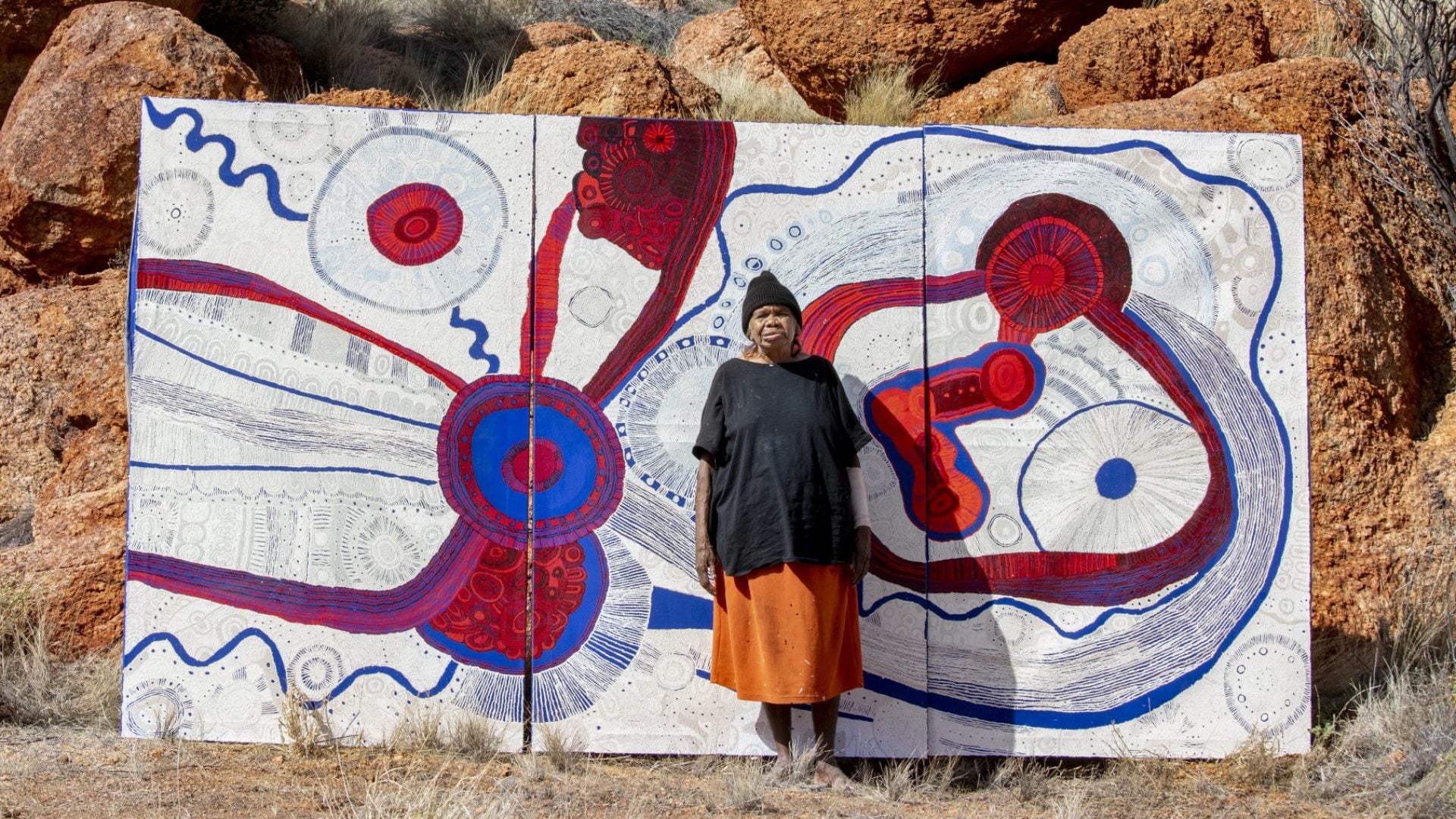
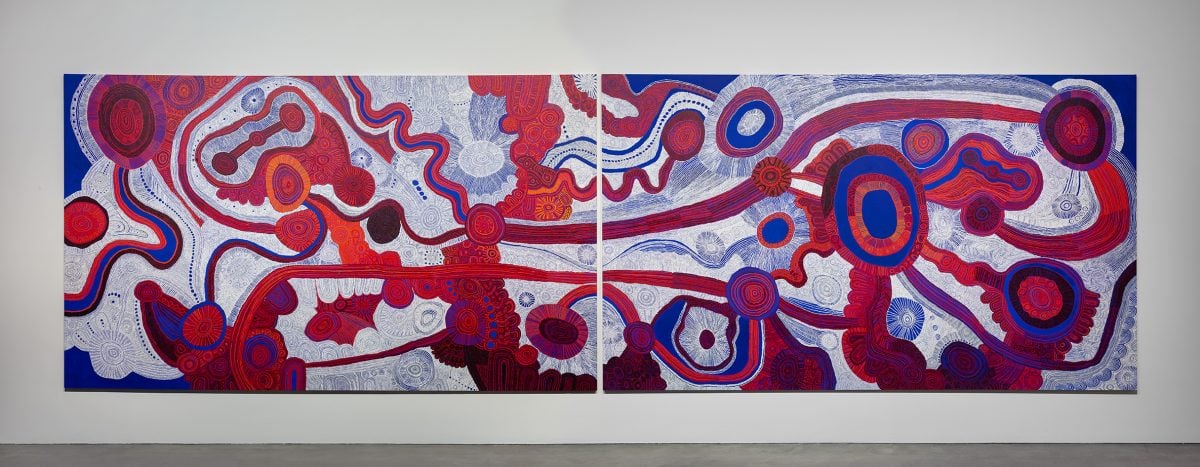
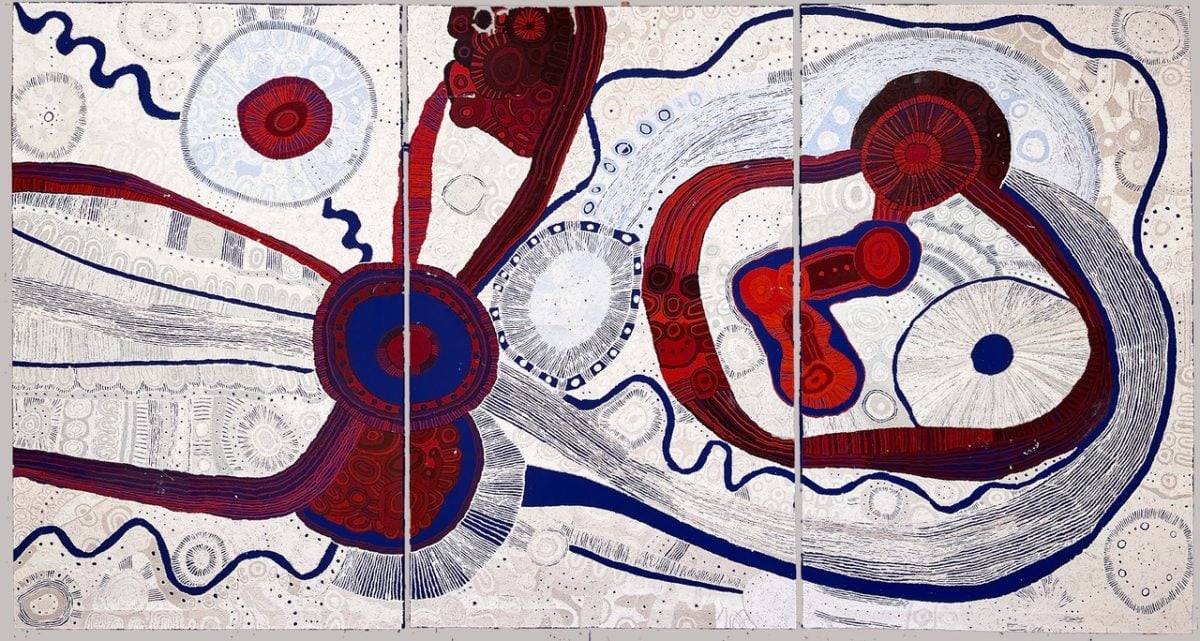
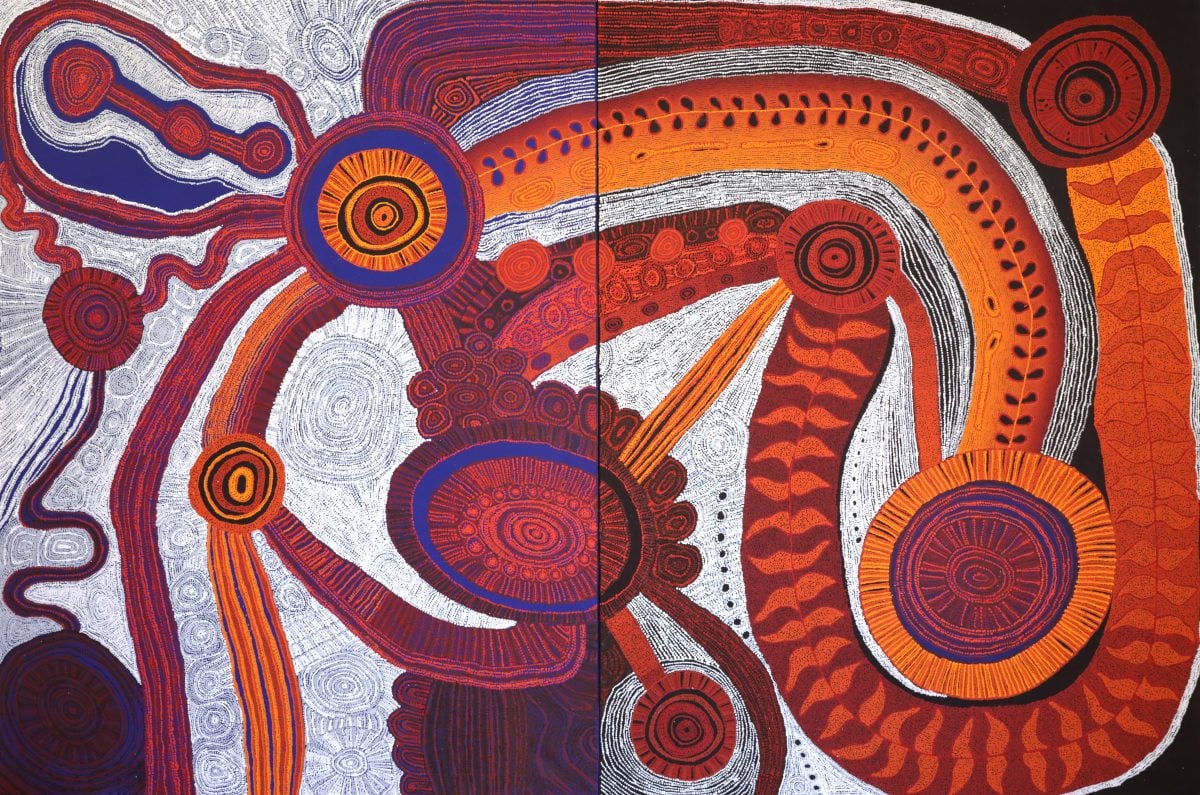
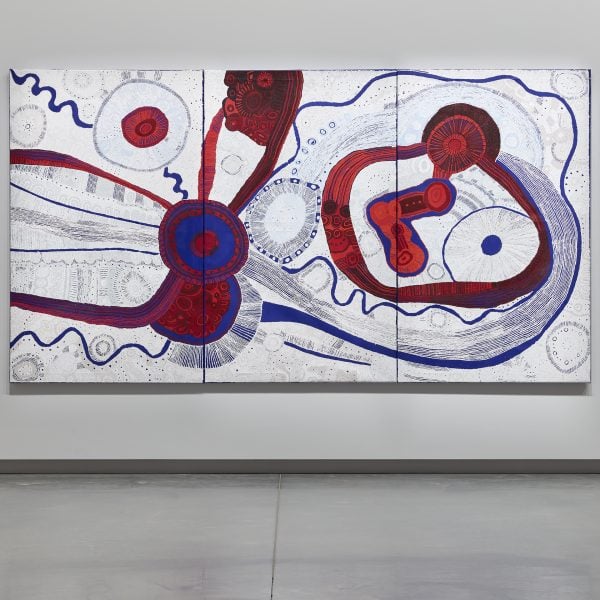
Betty Kuntiwa Pumani’s paintings reveal a shimmering landscape of red earth, bright blue waterholes and stippled white tobacco flowers. They represent Antara, her mother’s Country in the Anangu Pitjantjatjara Yankunytjatjara (APY) Lands in north-western South Australia, and Tjukurpa storylines centred on maku, the witchetty grub.
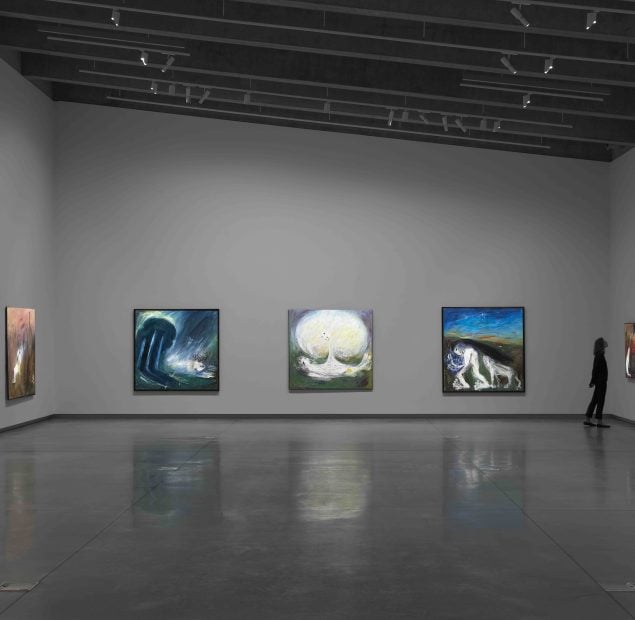
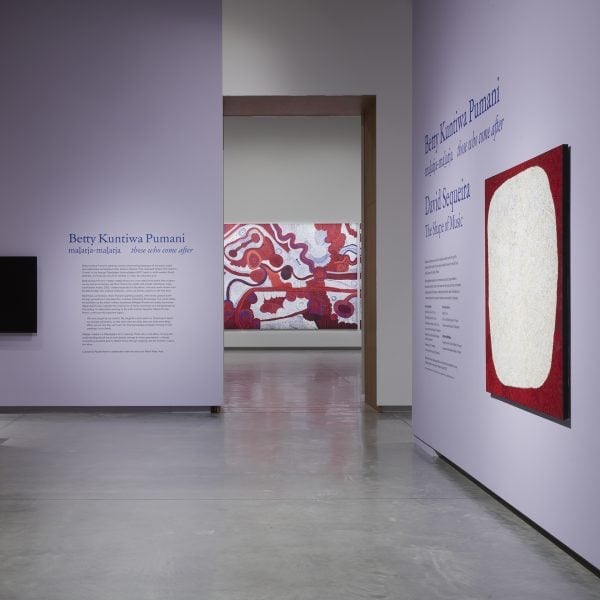
Betty Kuntiwa Pumani: maḻatja-maḻatja (those who come after) was the artist’s inaugural museum survey, encompassing key loans from public and private collections including the National Gallery of Australia and Museum of Contemporary Art Australia, and early works drawn from the Mimili Maku Arts Cultural Collection which were shown publicly for the first time.
Matrilineal connections inform Pumani’s painting practice, with stories passed down through generations in the depiction of Antara. Reflecting this lineage, four works in the exhibition by the artist’s mother, Kunmanara (Milatjari) Pumani and sister, Kunmanara (Ngupulya) Pumani, highlighted the importance of family connection and intergenerational storytelling.
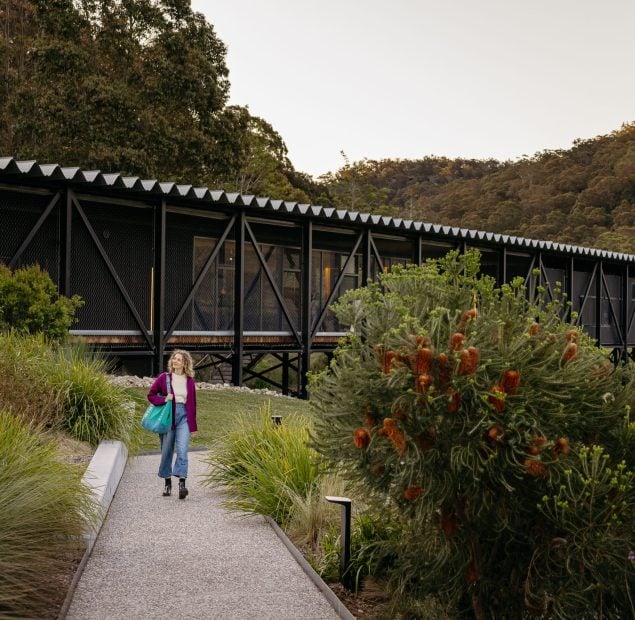
Curated by Bundanon CEO Rachel Kent in collaboration with the artist and Mimili Maku Arts, the exhibition introduced a major new commission ‘Antara’ (2025) created especially for Bundanon.
Maḻatja-maḻatja is a Pitjantjatjara term meaning ‘those who come after,’ carrying the understanding that all we do now already belongs to future generations – a thread connecting ancestral past to distant future through ongoing care for Country, culture, and story.